Our Process
No guesswork, no unnecessary digging, and no jargon. Follow the same four steps on every visit, from your first call to the final retest.
 /section>
Four steps, in this order - every time
Each step builds on the one before it. We do not jump to a repair until testing has shown where the water is actually going, and we do not leave until the repair has been checked again.
Call and listen
Call (480) 919-8308 at any hour. Tell us how fast the level is falling, when you first noticed it, and whether the pump, autofill, or equipment has changed recently.
We listen first, ask focused questions, and walk the pool and equipment pad on arrival to look for damp spots, cracks, and visible fitting problems.
Test
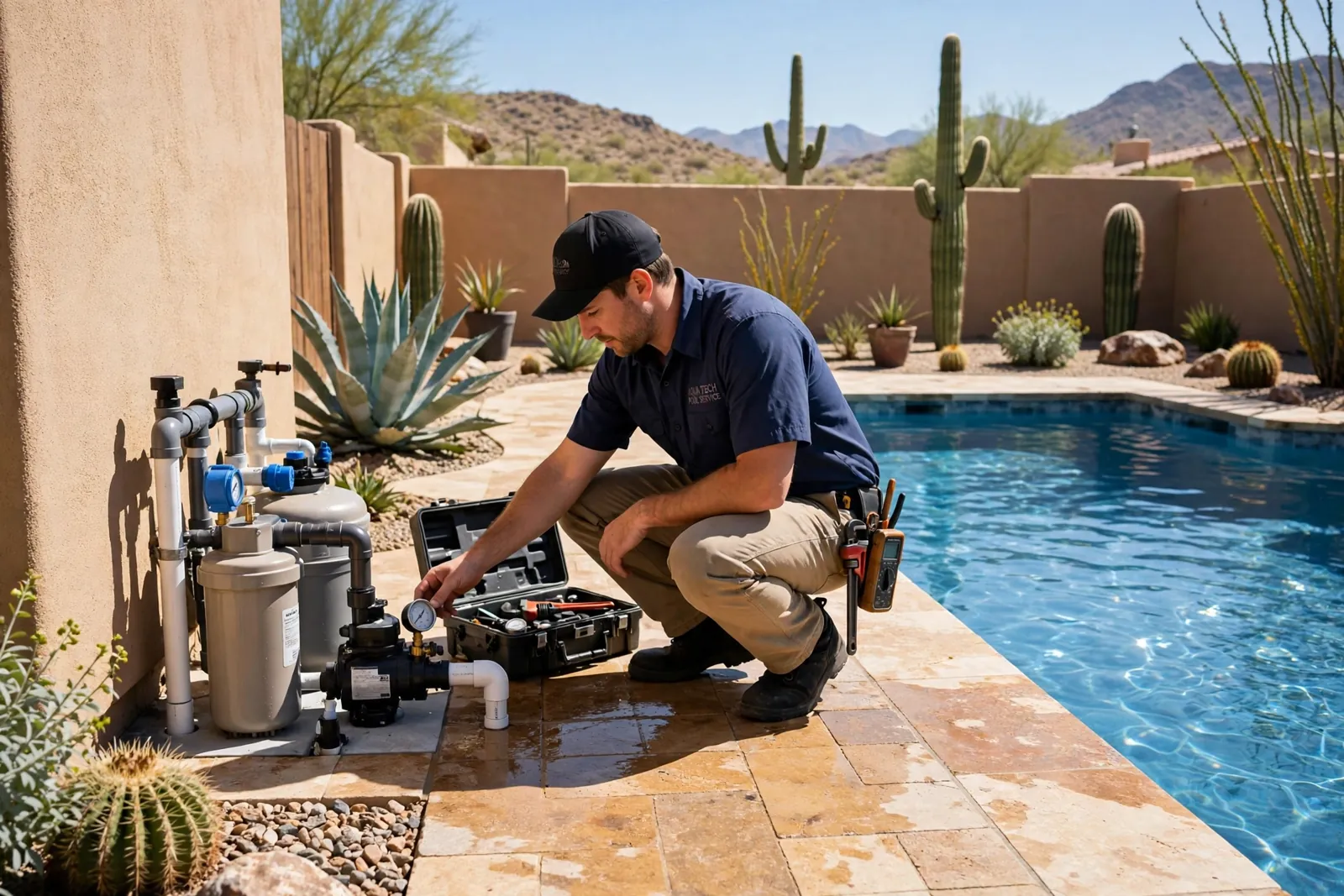
We isolate the system piece by piece. That can include electronic listening, pressure testing individual lines, and dye testing around fittings, lights, and the skimmer.
Testing narrows a whole-pool problem down to one line, joint, or fitting - before any digging or repair is discussed.
Pinpoint and prove
When a fault is found, we show you what the test revealed and explain it in plain language. You will hear what failed, why it matters, and what the repair options are.
Nothing is hidden behind technical terms. If a test is inconclusive, we say so and explain the next check, rather than guessing.
Fix and retest
Once you approve the repair, we complete it and then test the same area again. The visit is not finished when a part is fitted - it is finished when the retest confirms the loss has stopped.
You leave the visit knowing what was done, what was rechecked, and what to watch for in the days that follow.
What we check along the way
Skimmer and throat
Cracks, separation, and worn seals around the skimmer are a common source of steady loss, especially when the level drops to the skimmer and then slows.
Lights and fittings
Light niches, return fittings, and wall fittings are dye-tested carefully, because a small gap there can lose a surprising amount of water day after day.
Main drain and lines
Pressure testing helps separate a shell or fitting problem from an underground plumbing problem, so repair work stays targeted.
Equipment pad
Pumps, filters, valves, heaters, and exposed pipework are inspected for drips, weeps, and pressure changes that point to the fault.
What to expect on the day
- Most testing visits take about one to three hours, depending on the size of the system and how many lines need to be isolated.
- Clear access helps: please make sure the pool, equipment pad, skimmer, and any known valves can be reached safely.
- You get an explanation as we go, not just a result at the end - including what has been ruled out as well as what has been found.
- Repairs are retested before we leave, so you are not left wondering whether the fix worked.
- If no leak is found, we will say so and help you check evaporation, autofill settings, and normal equipment operation.
Frequently asked questions
Do I need to be home?
It helps, because findings can be explained as testing progresses. The main requirement is safe access to the pool and equipment.
Will you dig up my yard?
Only if a confirmed underground fault requires it. Testing first keeps any excavation focused on the exact location, rather than exploratory digging.
What happens if the leak is in more than one place?
We will explain each finding separately, in order of importance, so you can decide what to approve first and what can wait.
How do I know the repair worked?
The repaired area is retested during the same visit, and we will talk through what a steady water level should look like afterward.
Start Step 1 today
Open 24 hours in Apache Junction, AZ. One call starts the same careful, four-step process.